
Nearly half of U.S. adults now use AI chatbots such as ChatGPT, Gemini, or Copilot, and 38% of employed adults report using them for work-related tasks. AI is no longer limited to technology companies or specialists—it is becoming part of how ordinary people research, create, communicate, and solve problems.
According to the Pew Research Center’s AI research, AI adoption among U.S. adults continues to grow, creating new opportunities for businesses and independent professionals. Businesses are investing heavily in the same shift. Gartner forecasts that worldwide AI spending will reach approximately $2.59 trillion in 2026, driven by software, infrastructure, devices, and services built around AI. That spending does not guarantee easy income, but it shows that companies are actively paying for tools, systems, and people who can turn AI into useful business results.

TL;DR — AI-Powered Income in 2026
- AI itself is not a business. Sustainable income comes from using AI to deliver valuable services, products, or content more efficiently.
- Service-based work (freelance writing, video editing, automation) offers the fastest path to your first dollar.
- Blogging, affiliate marketing, and digital products take longer but can generate recurring revenue with less ongoing effort.
- Most successful AI entrepreneurs start with one model, prove it works, then expand into complementary income streams.
- Expertise, quality control, and customer acquisition matter more than which AI tools you use.
- The 90-day plan in this guide gives you a structured path from idea to first paying customer.
Table of Contents
- Key Takeaways
- What Is AI-Powered Income?
- Is AI-Powered Income Legit?
- The Main AI-Powered Income Models
- How to Build Sustainable AI-Powered Income
- Your 90-Day AI Income Roadmap
- Where to Go Next
- Frequently Asked Questions
Key Takeaways
- AI use is becoming mainstream, including for everyday workplace tasks.
- Businesses are spending heavily on AI, but they pay for useful outcomes—not access to the tools alone.
- You do not need advanced technical skills to begin; one marketable skill and a clear offer can be enough.
- Services generally provide the fastest route to initial revenue.
- Digital products, websites, and content-based businesses usually take longer but can become more scalable.
- AI can speed up parts of the work, but judgment, quality control, credibility, and customer acquisition still determine the results.
- Sustainable AI income comes from repeatable systems, not shortcuts or unedited AI output.
AI-powered income is money earned by combining AI with a valuable skill, service, product, or audience. You do not need to be a programmer or build your own AI model. You need to identify a problem people already pay to solve and use AI to complete the work more efficiently. That might mean using AI to deliver a freelance service faster, create and sell digital products, build a blog or affiliate website, produce videos, graphics, or marketing content, automate repetitive tasks for small businesses, or package your knowledge into templates, courses, or consulting.
The important distinction is that AI does not create a business by itself. It can accelerate research, drafting, production, analysis, and automation, but the income still depends on the offer, the customer, the quality of the result, and your ability to reach buyers.
Service-based work usually offers the quickest path to a first payment because you can sell a defined result directly to a client. Digital products, affiliate content, niche websites, and other asset-based models often take longer, but they can become more scalable because the same work may generate revenue repeatedly.
Results vary widely. A beginner may spend the first several weeks learning tools, creating samples, and searching for customers before earning anything. Others may secure a small project quickly by applying AI to a skill they already possess. Reaching several thousand dollars per month generally requires stronger positioning, dependable customer acquisition, repeatable systems, and evidence that the work produces real value. If you want a realistic look at what others earn, see How Much Do AI Content Creators Make?
This guide explains the major AI income models available in 2026, how they compare, what they realistically require, and how to choose a path that fits your skills, budget, schedule, and long-term goals. The purpose is not to promise effortless income. It is to help you identify an opportunity you can test, measure, improve, and potentially grow into a sustainable source of revenue.
This article may contain affiliate links. VentureLab360 may earn a commission at no additional cost to you if you purchase through one of these links.
What Is AI-Powered Income?
AI-powered income is money earned by using artificial intelligence to improve how a service, product, or business process is created and delivered. AI may help you complete work faster, reduce repetitive tasks, generate more variations, or provide a more consistent customer experience. Industry forecasts from IDC project continued investment in generative AI, reflecting growing demand for AI-powered products and services.
The income does not come from AI by itself. It comes from applying AI to something people already value, such as writing and marketing services, graphic design and video production, business automation, digital products and templates, blogging and affiliate marketing, or consulting, training, or research.
For beginners, this distinction matters. You do not necessarily need to develop software, train an AI model, or have a computer science degree. You need a useful skill, a defined audience, and an outcome someone is willing to pay for. A freelance writer might use AI to accelerate research and create a first draft. A small-business consultant might use automation tools to reduce a client’s administrative work. A creator might use AI to develop templates, videos, or educational products that can be sold repeatedly. In each case, AI supports the process. The customer pays for the finished result.
If you’re completely new to the topic, our guide to AI Passive Income Ideas That Actually Work explains the different ways people are using AI to build online income.
How AI Creates Value
AI creates value when it improves one or more parts of a workflow without reducing the quality of the final product. Depending on the task, AI can help with researching topics and organizing information, brainstorming ideas and creative angles, producing outlines and first drafts, generating scripts, images, or design concepts, repurposing content into multiple formats, translating, transcribing, and captioning media, automating repetitive administrative tasks, reviewing data and identifying patterns, or assisting with basic coding and troubleshooting.
The greatest advantage is not simply that AI can produce something quickly. It is that AI can reduce the time spent on lower-value steps so that more attention can go toward strategy, judgment, customization, and quality control.
| Deliverable | How AI Can Assist | Human Contribution | Value to the Customer |
|---|---|---|---|
| Blog article | Research, outlining, first drafts, revisions | Fact-checking, experience, voice, SEO decisions | Faster production without sacrificing usefulness |
| Spokesperson video | Script drafts, avatars, captions, variations | Brand direction, editing, accuracy, final approval | More videos and faster campaign testing |
| Video translation | Transcription, translation, dubbing, captions | Language review, cultural context, quality assurance | Broader audience reach and quicker localization |
| Thumbnail concepts | Idea generation, layouts, image variations | Brand consistency, audience judgment, final design | More creative options and faster testing |
| Business automation | Workflow mapping, formulas, routing, draft logic | Process decisions, integration, testing, maintenance | Less repetitive work and fewer manual errors |
The actual time savings will vary by task, tool, experience level, and quality standard. A simple draft may be generated in minutes, while a professional finished product may still require substantial editing and review. An AI-powered business should not compete only by producing more work. It should use the saved time to provide better service, faster turnaround, stronger customization, or more competitive pricing.
AI Is a Tool, Not a Business Model
Owning a subscription to ChatGPT, Canva, or another AI platform does not automatically create something people will buy. A business still needs a specific customer, a problem worth solving, a clear offer, a dependable way to deliver the result, a method for reaching buyers, and quality standards that build trust.
The strongest AI income opportunities usually combine artificial intelligence with an existing skill or area of knowledge. Writing, design, video editing, sales, operations, teaching, consulting, and industry expertise can all become more productive when supported by the right tools.
For example, “I provide AI services” is too broad to be compelling. A more marketable offer would be:
I create four SEO-focused blog articles each month for local service businesses, including research, editing, formatting, and WordPress publishing (using AI platforms like Foenix.ai).
The second offer identifies the customer, deliverable, scope, and outcome. AI may make the work faster, but the client is buying a reliable content service—not access to the software. A useful rule for beginners is: Choose one result people already pay for, then use AI to deliver that result more efficiently. That approach turns AI from an interesting tool into part of a repeatable income system.
Is AI-Powered Income Legit?
Yes—but not for the reasons many people claim. Artificial intelligence has made it faster and easier to create content, automate repetitive tasks, analyze information, and build digital products. Before you start, it is also worth understanding whether you can legally sell AI-generated content in 2026. Those capabilities have created genuine business opportunities, but AI itself is not the source of the income. The income comes from solving problems that customers are already willing to pay to have solved.
Whether you’re offering freelance services, selling digital products, building an affiliate website, or automating business processes, the same business fundamentals still apply. You need a valuable offer, satisfied customers, and a reliable way to reach new buyers. AI changes how the work gets done—not why customers pay for it.
Real Opportunities vs. Online Hype
Social media is filled with videos promising effortless AI wealth: “Make $700 a day with one prompt,” “Copy this workflow and quit your job,” “Push one button and watch the money roll in.” Most of these claims leave out the hardest parts of building a business: finding customers, standing out from competitors, delivering consistently high-quality work, building trust, and improving your offer over time.
The most successful AI entrepreneurs rarely rely on a single viral tactic. Instead, they develop repeatable systems that solve real business problems. Many people earn their first AI income through service-based work because it provides immediate cash flow and valuable experience. As they become more efficient, they often expand into digital products, affiliate marketing, online courses, memberships, or other scalable income streams. The goal is not to chase the latest AI trend. It is to build assets and systems that continue producing value long after the initial work is complete.
Common Claims vs. Reality

| Popular Claim | What Usually Happens | What Actually Works |
|---|---|---|
| “Push one button and get paid.” | Generic content with little differentiation quickly gets ignored. | Combine AI with expertise, editing, and a clearly defined customer need. |
| “Copy this prompt to make thousands.” | Thousands of others copy the same prompt, creating intense competition. | Develop your own workflows, test them, and improve them based on customer feedback. |
| “AI replaces the entire job.” | Unedited AI output often contains mistakes, lacks context, and requires revision. | Use AI to accelerate production while applying human judgment, quality control, and experience. |
| “Anyone can get rich overnight.” | Most successful businesses take months of learning, testing, and refinement. | Focus on building repeatable systems that become more valuable over time. |
What AI Can’t Replace
AI continues to improve rapidly, but several areas still depend heavily on human judgment. AI can generate ideas, write drafts, create images, and summarize information. It is much less reliable at understanding business goals, making strategic decisions, building relationships, negotiating with clients, or creating original insights based on real-world experience. Customers rarely pay for a first draft. They pay for accuracy, judgment, creativity, reliability, industry expertise, and results.
Another challenge is distribution. As AI makes content creation easier, producing content becomes less of a competitive advantage. Getting the right content in front of the right audience becomes increasingly valuable. Whether you’re building a blog, freelancing, selling templates, or creating videos, customer acquisition is often the biggest obstacle—not content production. The businesses that thrive over the next several years will likely be those that combine AI efficiency with human expertise, strong branding, consistent quality, and repeatable marketing systems.
The Long-Term Opportunity
The biggest opportunity is not replacing people with AI. It is helping people accomplish more with AI. Businesses are looking for ways to save time, reduce costs, improve customer experiences, and increase productivity. Individuals who can combine AI tools with practical skills to deliver those outcomes will continue to find opportunities as AI adoption grows.
“How can I use AI to create more value for the people I’m trying to serve?”
That shift in mindset is what turns AI from an interesting technology into a sustainable source of income.
The Main AI-Powered Income Models
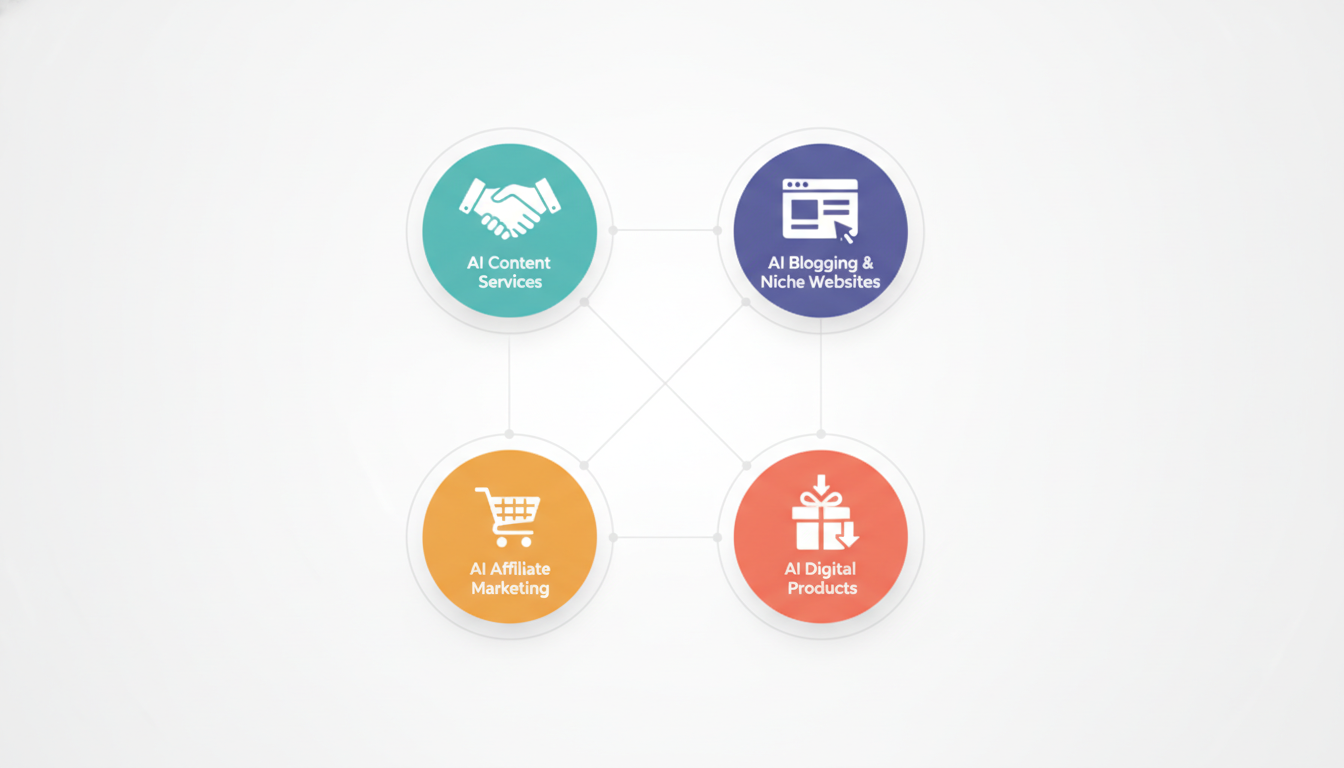
There is no single “best” way to earn AI-powered income. The right model depends on your skills, available time, budget, and long-term goals. Most successful AI businesses fit into one of four categories:
- Service businesses, where clients pay you to complete work.
- Content businesses, where articles, videos, or newsletters generate ongoing revenue.
- Digital products, where you create something once and sell it repeatedly.
- Affiliate businesses, where you earn commissions by recommending products people already want.
Many creators eventually combine several of these models. For example, you might begin by offering freelance AI writing services to generate immediate income while simultaneously building an affiliate website that produces long-term passive revenue. As your audience grows, you could expand into selling templates, prompt packs, or online courses. That combination often provides both short-term cash flow and long-term scalability.
| Income Model | What You Build | How AI Helps | Biggest Challenge | Long-Term Potential |
|---|---|---|---|---|
| AI Blogging & Niche Websites | SEO-focused content websites | Research, outlines, drafting, optimization | Building traffic takes time | High |
| AI Affiliate Marketing | Content recommending products | Keyword research, comparisons, planning | Building trust with readers | High |
| AI Digital Products | Templates, prompt packs, courses, ebooks | Creation, formatting, organization | Standing out from competitors | Very High |
| AI Content Services | Client work such as writing, video, SEO, automation | Faster production and workflow efficiency | Finding and retaining clients | Medium to High |
The sections below explain how each model works, who it is best suited for, and the tradeoffs to consider before investing your time. For a broader overview of which models offer the best return, see Best AI Business Models for Beginners Ranked by ROI.
AI Blogging and Niche Websites
AI blogging is one of the most scalable AI-powered income models because each published article becomes a long-term business asset. Instead of earning money only when you’re actively working, a blog can continue generating revenue through affiliate marketing, display advertising, email subscribers, sponsored partnerships, digital product sales, and lead generation. AI-powered tools like SEOWriting dramatically speed up keyword research, outlining, competitor analysis, and first drafts, allowing creators to publish more consistently. However, AI is not a replacement for expertise. Google increasingly rewards content that demonstrates experience, originality, and genuine usefulness. Publishing large amounts of lightly edited AI text can reduce search visibility instead of improving it.
You can also learn how AI is changing search by reading How to Optimize Your Website for ChatGPT Search. The websites that perform best combine AI efficiency with careful editing, original examples, internal linking with Link Whisper, and regular content updates. Best for: People willing to invest several months building a long-term online business. If blogging interests you, read our complete guide to AI Blogging for Beginners and check AI Blogging Mistakes That Kill Traffic and Earnings.
AI Affiliate Marketing
AI Affiliate Marketing allows you to earn commissions by recommending products or services that genuinely help your audience. Unlike traditional advertising, affiliate income depends on trust. Readers click and purchase because they believe your recommendations are accurate and useful. AI can assist with keyword research, comparison outlines, product summaries, content planning, SEO optimization, and updating older articles. The human element remains essential. Strong affiliate content includes firsthand observations, honest pros and cons, practical examples, and recommendations that match the reader’s intent. Best for: Bloggers, educators, and content creators building long-term recurring income. See our Best AI Affiliate Programs for Beginners guide and How AI Affiliate Programs Work.
AI Digital Products
Digital products combine AI efficiency with one of the most scalable online business models available. For a step-by-step walkthrough, read our guide on how to create AI prompt packs. Instead of trading time for money, you create a product once and sell it repeatedly. Examples include prompt packs, templates, checklists, Notion systems, spreadsheets, design assets, ebooks, online courses, and workflow libraries. AI accelerates brainstorming, drafting, formatting, editing, and product expansion. Success depends less on production speed and more on solving a specific problem better than existing alternatives. Best for: Creators who enjoy building assets that can generate recurring sales over time. See How to Sell AI Prompt Packs and Best AI Digital Products to Sell Online.
AI Content Services
Offering AI-assisted services remains one of the fastest ways to earn your first income. Businesses continue hiring freelancers and agencies to produce blog articles, SEO content, email campaigns, social media management, YouTube scripts, video editing, marketing assets, and workflow automation. AI allows professionals to complete much of the repetitive work more efficiently, increasing capacity without sacrificing quality. However, clients are paying for the finished product—not the AI tool. Best for: Beginners who want to earn income quickly while developing long-term business assets. If you want to start fast, The Fastest Way to Make Money With AI covers how to land your first client quickly.
How to Build Sustainable AI-Powered Income
The goal is not to make money with AI once. The goal is to build a business that continues generating income as technology, platforms, and customer needs evolve. Sustainable AI-powered income comes from creating systems that consistently deliver value—not from chasing the latest trend or viral opportunity.
Focus on Solving Ongoing Problems
The most durable businesses solve problems that do not disappear when a new AI tool launches. Businesses will always need help with marketing, customer communication, content creation, process automation, lead generation, and productivity improvements. AI changes how these problems are solved, but it does not eliminate the demand for solutions. Choose a niche where customers have ongoing needs rather than one-time curiosity.
Build Repeatable Systems
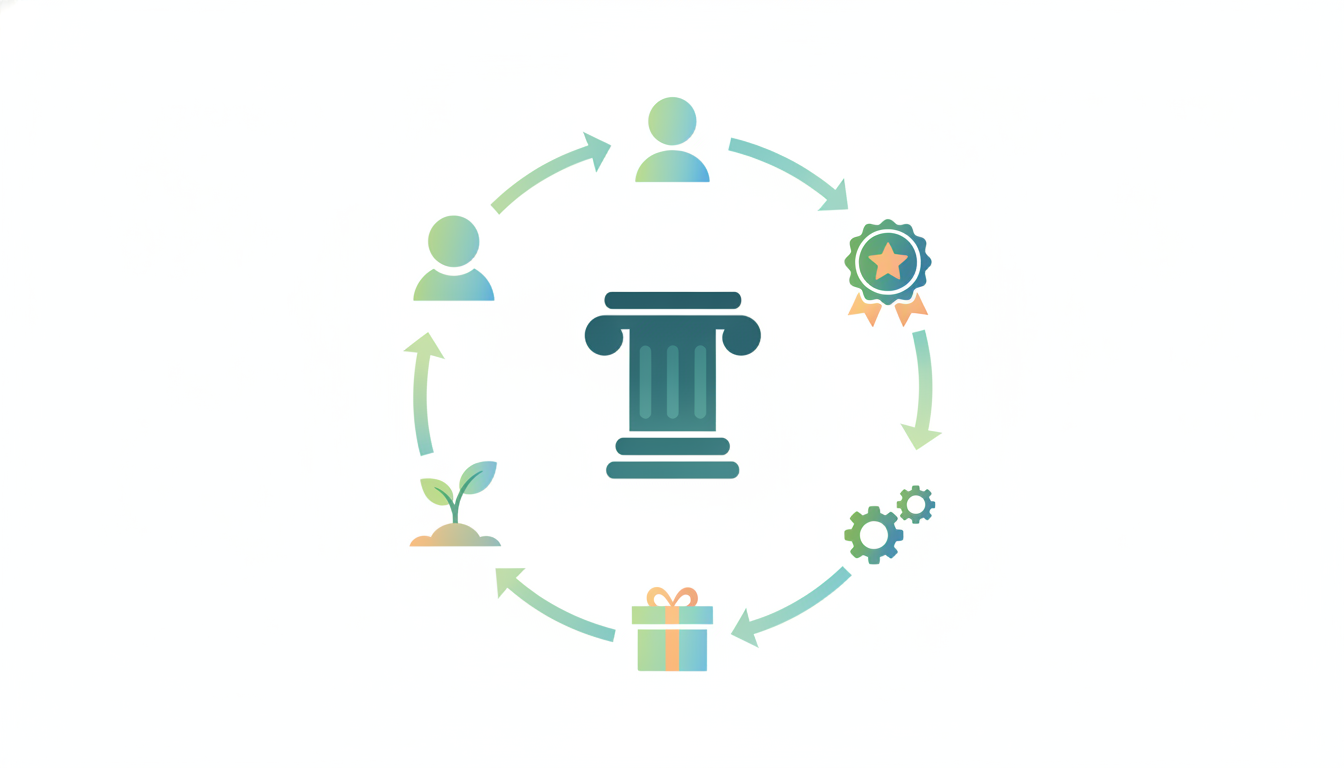
Successful AI businesses rely on documented workflows rather than reinventing every project. Creating templates—such as sellable AI templates—is one way to standardize your process. Create systems for client onboarding, research, content creation, quality assurance, delivery, and follow-up. Templates, checklists, and standard operating procedures improve consistency while reducing the time required for each project. The more repeatable your process becomes, the easier it is to increase capacity without sacrificing quality.
Build Trust Through Proof
Customers are more likely to buy when they can see evidence that your process works. Over time, build a portfolio that includes case studies, testimonials, before-and-after examples, sample projects, and measurable results. For bloggers and affiliate marketers, your published content becomes part of that proof. For freelancers and consultants, client success stories often become your strongest marketing asset. Trust compounds just like traffic and referrals do.
Create Offers That Are Easy to Buy
One of the fastest ways to grow is to package your expertise into clearly defined offers. Instead of “I provide AI consulting,” try AI Content Package for Local Businesses, AI Blog Management Service, AI Workflow Automation Setup, Monthly SEO Content Subscription, or AI Training Workshop for Small Teams. Clear offers make pricing easier, reduce misunderstandings, and help customers understand exactly what they are buying.
Diversify Your Income Streams
Relying on a single client or platform creates unnecessary risk. As your business grows, look for opportunities to combine complementary income sources. A freelancer might add digital products, a blogger might add affiliate marketing, a consultant might add online courses, and an automation specialist might add monthly maintenance plans. Diversification makes your business more resilient if one revenue source slows down.
Continue Investing in Your Expertise
AI tools will continue to evolve. Your competitive advantage is not knowing the latest software—it is understanding your customers, your industry, and the problems you solve. Stay current by testing new AI tools, learning from customer feedback, refining your workflows, following industry changes, and building skills that AI cannot easily replace, such as strategy, communication, and decision-making.
Build for the Long Term
Search engines, AI models, and software platforms will all continue to change. Instead of relying on shortcuts, build assets that become more valuable over time. These include a content-rich website, an email list (using a platform like Systeme.io), a portfolio of successful projects, strong client relationships, repeatable business systems, and a recognizable personal or business brand. Unlike individual AI tools, these assets continue working for you even as technology evolves.
| Area | Focus |
|---|---|
| Customer Acquisition | Build multiple ways to attract new customers through content, referrals, marketplaces, and outreach. |
| Delivery | Standardize your workflow with templates, checklists, and quality control. |
| Trust | Collect testimonials, publish case studies, and demonstrate real-world results. |
| Growth | Raise prices, improve systems, and expand your offers as your experience grows. |
| Resilience | Diversify your income streams and continue building assets you own. |
Your 90-Day AI Income Roadmap

Building AI-powered income becomes easier when you stop trying to master everything at once. Your first 90 days should be treated as a structured business experiment. The goal is to choose one offer, develop a reliable workflow, test it with real customers, and build a foundation you can improve over time. You may earn money during this period, but revenue should not be the only measure of progress.
Days 1-30: Build Your Foundation
The first month is about focus and proof. Choose one business model, one target audience, and one outcome you can help customers achieve. For example, SEO blog content for local service businesses, short-form video editing for real estate professionals, AI voiceovers for course creators, email campaigns for ecommerce brands, or workflow automation for small businesses. Turn that idea into a one-sentence offer: I help [type of customer] achieve [specific outcome] by providing [service].
Create Proof of Your Ability
Before asking customers to hire you, produce several portfolio-quality samples. Your proof might include before-and-after content examples, sample videos or voiceovers, design mockups, automation walkthroughs, a short case study explaining your process, or a demonstration created for a real business. Present your work on a simple portfolio page, professional social profile, or marketplace listing. You do not need a complicated website to begin.
Start Customer Conversations
Once you have something to show, begin testing your offer. You can reach potential customers through Fiverr or Upwork, LinkedIn, direct email, local business outreach, industry communities, or your existing professional network. Consistency matters more than sending an arbitrary number of messages. Track how many people you contact, how many respond, what questions they ask, and why they do or do not move forward.
Days 31-60: Improve Your Offer and Delivery
During the second month, use real-world feedback to improve your business. Review the questions, objections, and requests you have received. Look for patterns. You may discover that your offer is too broad, your audience does not understand the benefit, your pricing needs clarification, customers repeatedly request the same additional service, or one type of sample receives more interest than the others. Use that information to sharpen your positioning.
Improve Quality and Consistency
Create a quality-assurance checklist for every project. Depending on your service, this might include fact-checking, grammar and clarity review, brand-voice checks, formatting, originality, functionality testing, and client requirement verification. AI should make your process more efficient, but every deliverable should still receive human review.
Introduce Packages or Recurring Services
Once customers understand your work and you can deliver consistently, consider turning your service into a package. Instead of offering general AI content support, you might sell four SEO articles per month, twelve short-form videos per month, a monthly email marketing package, a small-business automation setup, ongoing workflow maintenance, or a recurring content repurposing service. Packages make your offer easier to understand and can create more predictable income.
Days 61-90: Build Repeatable Systems
The third month is about reducing chaos. By now, you should have enough experience to identify the steps you repeat for every project. Document those steps so you do not have to rebuild your workflow each time. Create templates for customer onboarding, project briefs, research, prompts, production, quality assurance, delivery, follow-up, and testimonial and referral requests. These systems improve consistency and make it easier to handle more work without sacrificing quality.
Strengthen Customer Acquisition
Review which channel created the best conversations during the first 60 days. Instead of trying to be active everywhere, concentrate on the one or two channels showing the most promise. For example, improve your Fiverr listing if marketplace leads are converting, publish more demonstrations if LinkedIn posts attract prospects, refine your email targeting if direct outreach earns replies, or ask satisfied customers for introductions if referrals are working.
Look for Your Next Revenue Layer
After validating your primary offer, consider adding one complementary income stream. A freelancer might create a template or prompt pack based on a repeated customer need. A blogger might add affiliate recommendations. An automation consultant might introduce a monthly maintenance plan. Do not add a second income stream simply because 90 days have passed. Add it only when your primary business has revealed a genuine opportunity.
90-Day AI Income Roadmap at a Glance
| Timeframe | Main Focus | Key Actions | Progress Milestones |
|---|---|---|---|
| Days 1-30 | Focus and proof | Choose one offer, build samples, create a simple portfolio, and begin outreach | Clear offer, reliable workflow, portfolio samples, customer conversations, and possibly a first paid project |
| Days 31-60 | Validation and improvement | Refine positioning, improve quality control, gather feedback, and introduce packages | Better proposals, fewer revisions, stronger proof, testimonials, and clearer pricing |
| Days 61-90 | Systems and consistency | Document workflows, focus on productive sales channels, request referrals, and review results | Repeatable delivery, stronger acquisition routine, case studies, referrals, and a plan for continued growth |
What to Track During the 90 Days
| Area | What to Measure |
|---|---|
| Outreach | People contacted, replies, calls, and proposals |
| Sales | Paid projects, conversion rate, and average project value |
| Delivery | Completion time, revisions, and customer satisfaction |
| Proof | Samples, testimonials, case studies, and referrals |
| Expenses | Software subscriptions and other business costs |
| Improvement | Changes made to your offer, process, or positioning |
Tracking results helps you make decisions based on evidence rather than emotion. A week without a sale is not necessarily failure. You may have improved your portfolio, discovered a better audience, refined your offer, or learned which outreach method does not work. Those lessons make the next attempt stronger.
Where to Go Next
You do not need to pursue every AI income opportunity at once. Your next step should depend on what you have already tested, what customers responded to, and which part of the process is currently holding you back. If you have already made a sale, build on that proof before changing direction. If you are still getting started, choose one path and follow it until you have enough evidence to evaluate it properly.
If You Started With AI Content Services
Once clients are paying for individual articles, social posts, or email campaigns, look for ways to turn those projects into a more complete service. For example, you might combine SEO blog content, email newsletters, social media posts, landing page copy, and content repurposing. Bundling related deliverables can increase the value of each client without forcing you to enter an entirely new niche.
If You Started With AI Blogging
Your first priority should be publishing useful content and building topical authority. As your content library grows, learn How to Build Content Clusters and Topical Authority Using AI to strengthen your site’s SEO over time. Once your site begins attracting visitors, you can expand its monetization through affiliate marketing, email capture, digital products, display advertising, sponsored content, or freelance services.
If You Started With Affiliate Marketing
Review which articles, keywords, and recommendations are generating interest. Then strengthen the path between the reader’s question and the product that solves it. That may involve creating product reviews, tool comparisons, alternatives articles, tutorials, pricing guides, or use-case demonstrations. The goal is not to insert more affiliate links—it is to create better buying guidance. See Best AI Affiliate Programs for Beginners.
If You Started With Voice or Video Services
After completing several individual projects, look for recurring production needs. Possible expansions include monthly short-form video packages, course narration, YouTube voiceovers, product demonstrations, localization and dubbing, branded spokesperson videos, or podcast editing and repurposing. Tools like CapCut can help you edit and produce videos more efficiently. A defined monthly package is often easier to sell than an open-ended promise to create any type of video or audio content.
If You Started With AI Automation
Start by identifying the repetitive workflows that waste time or create errors. That could include lead capture and routing, appointment reminders, customer onboarding, email follow-up, CRM updates, reporting, or content handoffs. After the initial setup, you may be able to offer monitoring, maintenance, documentation, and workflow improvements as an ongoing service.
If You Started With Digital Products
Use customer behavior to guide your next release. Pay attention to which products sell, which listings attract views, common support questions, reviews, refund requests, and features customers request repeatedly. Instead of creating unrelated products, build a connected catalog around the same audience.
If You Need Your First Customer
Your next step is not adding another AI tool. It is putting your offer in front of real people. You can test a service through Fiverr, Upwork, LinkedIn, direct email, local business outreach, professional communities, or your existing network. Use the responses you receive to improve your pricing, samples, description, and target audience.
Choose Your Next Move
| What You Have Now | Best Next Move | Long-Term Opportunity |
|---|---|---|
| Individual content projects | Bundle related deliverables | Monthly content retainer |
| A growing blog | Add relevant monetization | Affiliate income, email, and digital products |
| Affiliate clicks or impressions | Build supporting buying content | Stronger conversions and topic authority |
| Voice or video projects | Create a recurring production package | Monthly client revenue |
| Completed automations | Add monitoring and support | Maintenance retainers |
| A digital product with sales | Build related products and bundles | Repeat purchases and owned audience |
| Skills but no customers | Test one specific offer | First sale, testimonials, and validation |
Expand Only After You Find Evidence
More tools, products, and platforms do not automatically create more income. Expand when you have evidence such as customers requesting related work, an offer converting consistently, repeat purchases, search traffic around a specific topic, a production bottleneck that software can solve, or enough demand to justify a new service or product. This keeps your business focused and protects you from spending months building something nobody has asked for.
Final Thoughts
AI has made it easier than ever to start an online business, launch a side hustle, or improve the way you work. But the technology itself is not the opportunity. The opportunity is using AI to solve real problems more efficiently than you could before. Throughout this guide, we have explored the most common ways people are building AI-powered income—from freelance services and blogging to affiliate marketing, digital products, automation, and consulting. While each path is different, they all share the same foundation: choose one business model, solve a specific problem, deliver consistent quality, build trust over time, and improve your systems as you grow.
The people who succeed with AI are not necessarily the ones using the newest tools or writing the most advanced prompts. They are the ones who consistently help customers achieve meaningful results. If you are just getting started, do not worry about building the perfect business. Focus on building your first business. Choose one offer. Create a small portfolio. Start talking to potential customers. Learn from every project you complete, then use that experience to improve your process and expand your opportunities. Every successful AI-powered business starts with a single customer, a single sale, or a single piece of content. The important thing is to begin.
Frequently Asked Questions
What is AI-powered income?
AI-powered income is money earned by using AI tools to deliver products or services more efficiently. AI can help with writing, design, coding, marketing, automation, and content creation, but customers ultimately pay for the value and results you provide—not the AI itself.
Is it realistic to make money with AI?
Yes. Many freelancers, business owners, and creators use AI to improve productivity and expand their services. Success depends on choosing a valuable offer, finding customers, and consistently delivering quality work—not simply using AI tools.
Do I need to know how to code?
No. Many AI income opportunities require little or no coding. Content creation, affiliate marketing, digital products, design, and many automation projects can all be built using no-code or low-code tools.
What is the easiest way to start making money with AI?
The simplest approach is to use AI to improve a service people already buy. Examples include blog writing, email marketing, social media management, video editing, and virtual assistance. Start with one skill, one audience, and one clear offer.
Can AI blogging still work after Google’s updates?
Yes—but quality matters more than ever. Successful AI-assisted blogs combine original experience, helpful information, and careful editing. Learn how AI assistants for WordPress could change SEO and affiliate marketing to stay ahead. AI should support your workflow rather than generate large volumes of unedited content.
Can AI create passive income?
It can, but most passive income starts with active work. Blogs, digital products, affiliate websites, and online courses require significant upfront effort before they begin generating recurring revenue. See AI Passive Income Ideas That Actually Work.
What AI tools should beginners start with?
A simple toolkit is usually enough: ChatGPT or Claude (see our comparison) for research and drafting, Canva for graphics, SEOWriting for SEO-focused content, ElevenLabs for AI voice generation, and Link Whisper for WordPress internal linking.
How much does it cost to start an AI business?
Many people can begin with free tools or a modest monthly budget of $20-$40. Rather than buying numerous subscriptions immediately, start with only the software you need to deliver your first service or product. See How to Start AI Passive Income With No Money.
What are the biggest mistakes beginners make?
Common mistakes include chasing every new AI trend, trying to serve everyone instead of a specific niche, publishing raw AI output without editing, spending too much on software, and ignoring marketing and customer acquisition.
How do I get my first AI clients?
Start by creating a small portfolio that demonstrates your abilities. Then promote your services through marketplaces like Fiverr, professional platforms such as LinkedIn, direct outreach, referrals, or your existing network.
How long does it take to build AI-powered income?
The timeline varies depending on your experience, available time, chosen business model, and marketing efforts. Service businesses often reach their first customers sooner, while blogs, affiliate marketing, and digital products typically require more time.
What makes an AI business sustainable?
Long-term success comes from building assets and systems rather than relying on individual projects. Focus on developing repeatable workflows, collecting testimonials, improving your expertise, diversifying your income streams, and creating products or content that continue providing value over time.
What is the best AI income opportunity for beginners?
There is not one “best” option for everyone. The right choice depends on your skills, interests, available time, and business goals. Many people start with freelance services because they can generate cash flow relatively quickly. See Best AI Business Models for Beginners Ranked by ROI.